/about_mega.jpg?width=500&height=500&name=about_mega.jpg)

Increase Your Chances of Medical School Admissions in the Winter Months
/about_mega.jpg?width=30&name=about_mega.jpg) Jessica Freedman, M.D. : Oct 26, 2017
Jessica Freedman, M.D. : Oct 26, 2017
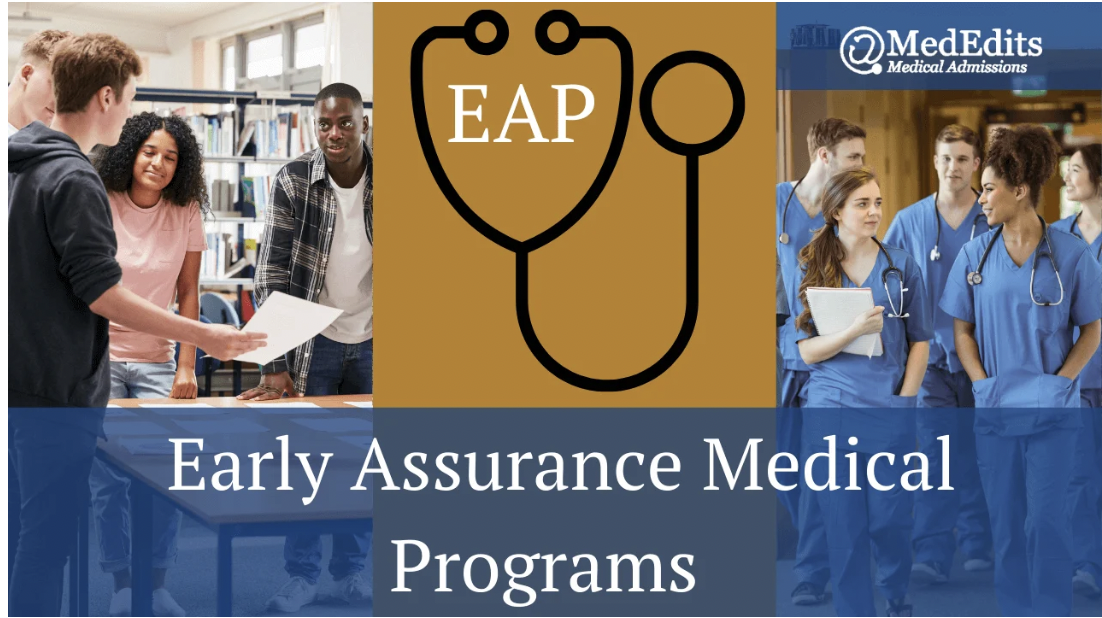
For students hoping to become physicians, the road is long and challenging. Most of the time, it means four years at an undergraduate college, possibly a gap year or two, four years of medical school, and a several-year residency.
While there aren’t any shortcuts to gain the skills and knowledge and requirements it takes to get into medical school, there are some ways for exceptionally talented and focused students to make the process more efficient and less anxiety-provoking. One of these routes is an early assurance program (EAP).
At MedEdits, we work with students who successfully apply and get accepted to EAPs around the country so we understand what a strong candidate “looks like.”
EAPs are geared toward undergraduate students who have proven that they are both high achieving and committed to pursuing a career in medicine. Through these pathways, future physicians apply to medical schools that have these programs, usually in their second year of college, and are accepted much earlier than their peers.
Acceptance to an EAP has many advantages. Not only can students alleviate the anxiety of having to wait until they’re close to graduation to learn their fates, but they can also bypass many of the usual requirements most notably taking the MCAT before admission.
Based on MedEdits' experience working with applicants to EAPs around the country, to be accepted, you must have an exemplary academic record, including both a high GPA and coursework consistent with premed requirements. You must also be willing to put in the effort to maintain a strong GPA; there are often requirements about keeping your grades up after you’re admitted into the program. Most EAP programs, if they allow students to bypass the MCAT, require students to submit ACT or SAT scores. Successful applicants have very high scores.
The vast majority of accepted students have a strong foundation of experience in science and medicine that was established in high school alongside their academic accomplishments.
The successful EAP applicants with whom we work at MedEdits typically have the same level of extracurricular, academic, and scholarly achievement as traditional medical school applicants.

The requirements for EAPs vary by program, but generally speaking, they consist of the following:
Some EAPs are reserved for their own undergraduate institutions or from select undergraduate institutions.
Usually, students are expected to complete at least five pre-med courses prior to acceptance, such as biology, chemistry, and organic chemistry. Some programs may be more specific about what coursework students should complete.EAP programs require that students have taken only some of those prerequisites before applying.
Your GPA must be at or above a certain threshold in the first two years of undergraduate college in order for you to be accepted into an EAP. The majority of students who are accepted to EAP programs have earned nearly straight As in the first semesters of college.
While taking the MCAT is often not required, some programs may ask for your SAT or ACT scores. Again, successful EAP applicants have earned ACT and SAT scores in the 99th percentiles.
Applicants should also submit materials that are required for admission into traditional medical programs, such as:
RELATED: Work with MedEdits on your EAP Application
RELATED: FlexMed Early Assurance Program at the Icahn School of Medicine at Mount Sinai
All EAP programs require interviews which are now held virtually.
If you’re interested in applying to an EAP, make sure you look into the requirements for admission early — within your first year of college or before — so you can ensure that you’re on track.
Note that some EAPs only accept students from the undergraduate college within the larger university or partner or affiliated colleges or universities.
Once you know the requirements, spend your first two years of college fulfilling them, all while maintaining a strong GPA. Remember, too, that you’ll usually need to show activities that offer evidence that you’ll succeed in a rigorous program and beyond, so this will require balance.
A pre-med advisor at your college or outside of it can help you ensure you’re fulfilling your requirements and offer guidance to help you on the road to an EAP or admission to medical school later on.
There are a lot of advantages to an EAP, but it’s not necessarily the best path for everyone. Here are some signs that it’s the right choice for you.
There is usually a minimum GPA for admission to an EAP, and it’s high. If your academic record is exemplary and you have taken the necessary pre-med courses, then you could be well prepared for this type of program.
Remember: an EAP doesn’t mean you’ll start medical school early. Instead, it means that you’ll be able to finish your undergraduate years without admission to med school looming over your head. You won’t need to worry too much about your GPA — although in many cases, you’ll still need to maintain a certain minimum — and you can get outside your comfort zone by exploring different types of courses.
You can also join activities you haven’t tried yet since you won’t have to devote your time to building medicine-related extracurriculars and working on your med school applications.
One of the most appealing aspects of EAPs, aside from alleviating your anxiety, is the time and money you’ll save on the medical school admissions process. You won’t have to apply to multiple schools and pay the application fees or go through several rounds of interviews. In some cases, you may not even have to study for or take the MCAT at all.
Of course, this means you’ll have to set on your future career far earlier than your peers. While you’re usually not required to attend an EAP if you’re admitted, the effort of applying probably isn’t worth it if you’re not positive that medicine is the right path for you. So, if you are sure, then go ahead and apply!
| Program | State | MCAT Required? | Open to All Applicants or Select Colleges? |
|---|---|---|---|
| Albany Medical College | NY | No | Select: partner colleges (see partner list below) |
| Boston University Chobanian & Avedisian SOM (EMSSP) | MA | Yes (taken during the program) | Select: historically Black colleges and universities and other minority-serving partner institutions (see partner list below). Recruiting paused in 2025 |
| Brody School of Medicine at ECU | NC | No | Select: partner colleges (see partner list below); North Carolina residents |
| Central Michigan University College of Medicine | MI | Yes | Select: CMED Honors students (by nomination, no direct applications) |
| Dartmouth Geisel School of Medicine | NH | No | Select: Dartmouth juniors |
| FIU Herbert Wertheim College of Medicine | FL | Yes (minimum 505) | Select: FIU Honors students |
| Georgetown University School of Medicine | DC | No | Select: Georgetown pre-med students |
| George Washington SMHS (Early Selection) | DC | Yes | Select: GW students and partner institutions |
| FlexMed, Icahn SOM at Mount Sinai | NY | No | Open to all applicants entering their second full-time year |
| Marshall Joan C. Edwards SOM | WV | No | Select: Marshall University students |
| Michigan State University College of Human Medicine | MI | Yes (minimum 500) | Select: Michigan colleges only. Eligibility criteria include being a first-generation college student, a graduate of a low-income high school as defined by the U.S. Department of Education, eligible for or a recipient of a PELL or institutional need-based grant, a graduate of an underserved (health professional shortage) urban or rural area, or someone who demonstrates interest in a high-need specialty or in practicing in a medically underserved community |
| Northeast Ohio Medical University (NEOMED) | OH | Yes | Select: cooperating colleges (by nomination) |
| Northwestern Feinberg SOM (NUPSP) | IL | No | Select: Northwestern undergraduates |
| Penn State College of Medicine | PA | Yes | Select: Penn State Behrend students |
| Perelman School of Medicine at the University of Pennsylvania (PASS) | PA | No (linkage admission without the MCAT) | Select: sophomores at 10 partner institutions, nominated by their pre-health office, through the Penn Access Summer Scholars (PASS) program (see partner list below) |
| Rutgers Robert Wood Johnson Medical School (ACES) | NJ | Not specified | Select: sophomores at partner schools through the ACES summer program (Academic Clinical Experience Summer), which can lead to early assurance at RWJMS. Confirmed participants are Princeton and Haverford (see partner list below) |
| Temple Lewis Katz School of Medicine | PA | Yes (no minimum listed) | Select: Temple and partner colleges (see partner list below) |
| Texas A&M University School of Medicine | TX | Yes (80th percentile comprehensive score) | Select: Texas A&M second-year students |
| Tufts University School of Medicine | MA | Required during and after the 2027-2028 academic year (minimum score 510) | Select: Tufts sophomores; Bates, Bowdoin, Colby, and University of Maine campuses (Maine track) |
| Tulane University School of Medicine (Creative Premedical Scholars) | LA | No for the Creative Premedical Scholars Program; required for the Xavier-Tulane Early Acceptance Program | Select: Tulane liberal arts students through the Creative Premedical Scholars Program. A separate Xavier-Tulane Early Acceptance Program partners with Xavier University of Louisiana for Xavier sophomores |
| UC Riverside SOM, Thomas Haider Program | CA | No | Select: UCR undergraduates and recent graduates |
| UAB Heersink SOM (Burroughs Wellcome Scholars) | AL | Yes (minimum 495) | Select: partner university students |
| University of Arizona COM, Phoenix | AZ | Not specified | Select: Arizona public university students |
| University of Arizona COM, Tucson (HEAP) | AZ | Yes (minimum 506) | Select: UArizona Franke Honors students (applies junior year) |
| University at Buffalo, Jacobs SOM | NY | Yes | Select: by nomination; applicants underrepresented in medicine |
| Loyola Stritch School of Medicine | IL | Yes (minimum 507) | Select: Loyola University Chicago undergraduates |
| University of Illinois COM Peoria (Bradley) | IL | Yes | Select: Bradley University students (see partner list below); Illinois residents preferred |
| University of Kansas School of Medicine | KS | Yes | Select: Scholars in Rural Health and Scholars in Urban Health tracks |
| University of Kentucky College of Medicine | KY | No | Select: UK partner universities; students planning to practice in Kentucky |
| UMKC School of Medicine | MO | Not specified | Select: partner university sophomores and juniors |
| University of Rochester School of Medicine | NY | No | Select: partner colleges |
| University of South Alabama College of Medicine | AL | Yes (minimum 504) | Open to all applicants; preference for AL, MS, and FL residents |
| UofSC School of Medicine Greenville | SC | Yes | Select: UofSC juniors from the Columbia campus |
| University of Toledo Medstart Program | OH | No | Open to incoming juniors at any US college or university |
| Wake Forest School of Medicine | NC | Yes | Select: Wake Forest undergraduates |
| Warren Alpert Medical School of Brown University (EIP) | RI | Waived for the Tougaloo track; the guides list it as required for the Rhode Island resident track | Select: Tougaloo College and Rhode Island cooperative schools (see partner list below) |
| Wayne State University School of Medicine | MI | Yes (70th percentile minimum for matriculation) | Select: partner colleges (see partner list below) |
| Program | Partner or feeder institutions |
|---|---|
| Albany Medical College (NY) | Syracuse University, Union College, Skidmore College, and University at Albany. |
| Boston University EMSSP (MA) | Founded in 1982 as a consortium of historically Black colleges and universities and later expanded to select Hispanic-serving and Pacific Islander-serving institutions. Current partners are Chaminade University, Clark Atlanta University, Dillard University, Hampton University, Morehouse College, Morgan State University, North Carolina Central University, Spelman College, Tougaloo College, University of Texas at El Paso, University of the Incarnate Word, University of the Virgin Islands, and Virginia Union University. The University of Massachusetts Lowell was added as a more recent partner. Recruiting was paused in 2025. |
| Brody School of Medicine at ECU (NC) | ECU Honors College, North Carolina A&T State University, and UNC Pembroke. |
| University of Illinois COM Peoria (IL) | Bradley University. |
| Perelman School of Medicine, PASS (PA) | Bryn Mawr College, Haverford College, Howard University, Morehouse College, Oakwood University, Princeton University, Spelman College, the University of Pennsylvania, and Xavier University of Louisiana, plus the STEMM PREP Project, a longitudinal research enrichment program. |
| Rutgers Robert Wood Johnson Medical School, ACES (NJ) | The ACES summer program is offered to Princeton University and Haverford College, whose successful participants may pursue early assurance at RWJMS. Secondary guides also describe a separate RWJMS disadvantaged-student pathway naming Rutgers University, Seton Hall University, Saint Elizabeth University, Monmouth University, and The College of New Jersey; that appears to be a different program and should be verified. |
| Temple Lewis Katz School of Medicine (PA) | Temple University, Washington and Jefferson College, DeSales University, Lehigh University, Moravian College, and Muhlenberg College. |
| Warren Alpert Medical School of Brown University, EIP (RI) | Tougaloo College is the primary partner, and its students receive an MCAT waiver. Brown also runs a Rhode Island cooperative strand that connects Providence College, Rhode Island College, and the University of Rhode Island to the medical school. |
| Wayne State University School of Medicine (MI) | Grand Valley State University and Calvin University. |
The EMSSP, Brown, and Perelman PASS rosters are drawn from the schools' official program pages. The Albany and ECU rosters are as provided. The Rutgers ACES entry reflects the Princeton and Haverford program pages, and the separate RWJMS pathway noted there should be verified before publishing. The Temple, Wayne State, and Illinois rosters reflect the source guides and should be confirmed against each school's official page. Several other programs in the chart are restricted to partner or cooperating institutions but do not publish a single clean roster in these sources, including George Washington, Michigan State (Michigan colleges), NEOMED, UAB, University at Buffalo, University of Kentucky, UMKC, and University of Rochester. Those partner lists can be sourced individually on request.
It depends on the program. Many still grant conditional acceptance without the MCAT, but a growing number require it, sometimes with a minimum score and sometimes taken during the program before your acceptance is finalized. Tufts, for example, will require a minimum score of 510 for conditional acceptances during or after the 2027-2028 academic year. Always confirm the current policy with each program.
Most programs set a high bar, commonly a cumulative and science GPA in the 3.5 to 3.7 range or above, and many expect you to maintain that GPA after you are admitted. In my experience, the students who are accepted have earned close to straight As in their first two years of college.
Usually not at the point of acceptance. Most programs allow you to remain uncommitted during your junior year and ask for a binding commitment later, often when you submit a special program application in your senior year that prevents you from applying to other schools that cycle. Read each program's commitment terms carefully, because they vary.
In most cases you can, up until the point where you formally commit. Many students hold the security of an early assurance acceptance while still exploring other options, then decide whether to move forward. Once you submit the binding commitment step, you typically give up the ability to apply elsewhere that year.
Most early assurance programs are restricted to students at a specific undergraduate institution or a defined group of partner colleges, and some also limit eligibility by residency or by background. A smaller number are open to students at any US college. Because eligibility is the first thing that rules students in or out, check it before you invest time in an application.
You apply to an early assurance program during college, usually in the spring of your sophomore year, after you have some college coursework behind you. A BS/MD program is different because you commit to medicine as a high school senior and enter a combined undergraduate and medical school track. An Early Decision program is part of the traditional application cycle and is binding, whereas an early assurance acceptance gives you an earlier decision and, in many cases, more flexibility.
/about_mega.jpg)

1 min read
Jessica Freedman, M.D. : Oct 23, 2024
Premed Professional Competencies: What medical school admissions committees are really seeking Medical school admissions committees and educators...