Skip to the main content.

about_mega


Your Path to Medical School Success

MedEdits Medical Admissions is the nation's premier medical school admissions consulting firm. Since 2007, founder Jessica Freedman, M.D., and our team of physician educators have guided thousands of aspiring medical professionals through their premedical and medical school journey. Our faculty advisors bring invaluable insider knowledge from serving on medical school admissions committees, education committees, and hospital boards. Combined with our specialized medical admissions writing coaches, we provide the comprehensive guidance and industry expertise essential for acceptance to medical school, residency, and fellowship programs.

7 min read

FlexMed at Mount Sinai: Requirements, Essays, and Admissions Data (2027)

FlexMed at Mount Sinai: Requirements, Essays, and Admissions Data (2027)

The FlexMed Early Assurance Program at the Icahn School of Medicine at Mount Sinai lets college sophomores in any major apply for guaranteed acceptance to medical school without taking the MCAT. It is one of the most selective early assurance programs in the country: Mount Sinai interviews about 80 to 100 of roughly 800 applicants each year. I served on the admissions committee at Icahn, and this guide explains what FlexMed requires, how to approach each part of the application, how the interview works, and what admitted students must do before they matriculate.

MedEdits results: Among students who work with us comprehensively on their FlexMed application, close to 40% are invited to interview.

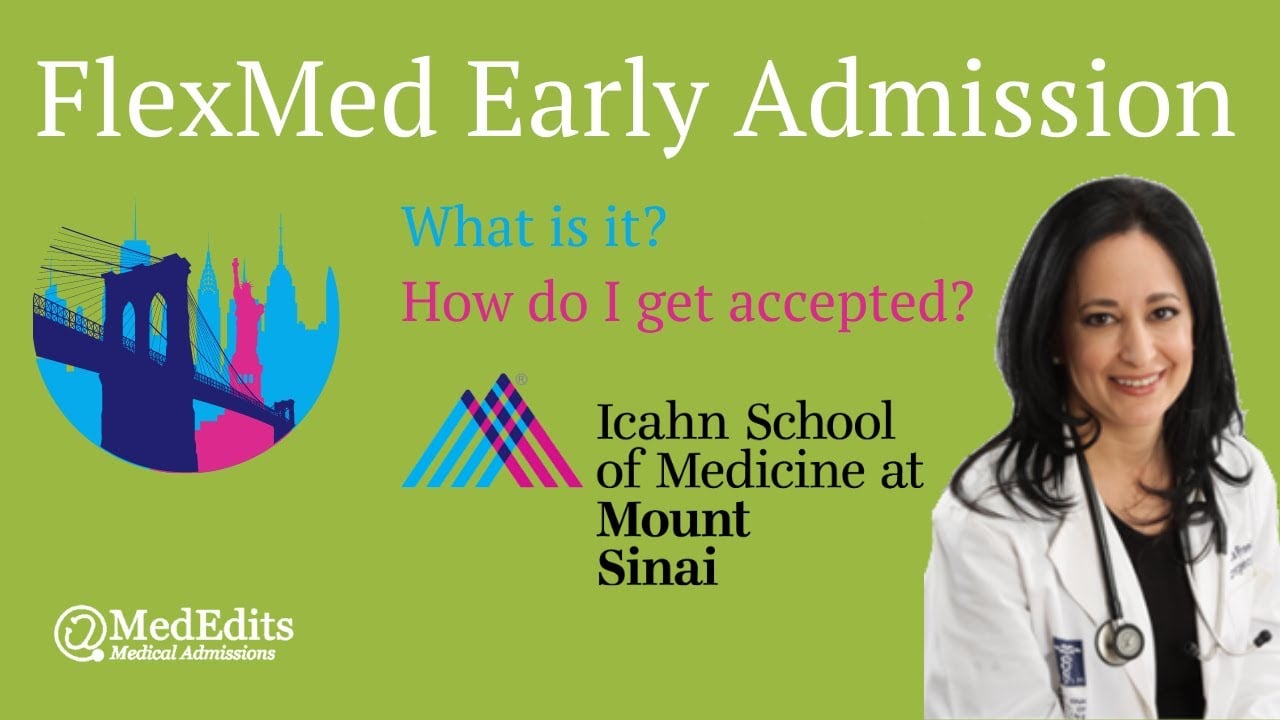
Watch: What It Takes to Earn a FlexMed Interview

In this episode of The Oath, we talk through how the FlexMed committee reads an application and where strong students most often fall short.

What Is the FlexMed Program at Mount Sinai?

FlexMed, formally the Donald and Vera Blinken FlexMed Program, launched in 2013. It builds on Mount Sinai's Humanities and Medicine Program (HuMed), which in 1987 became the first program in the United States to offer early assurance of acceptance to college sophomores. FlexMed opened that pathway to students in every major, from engineering and computer science to history and music.

Students apply in the spring semester of their sophomore year. Those who are accepted are exempt from the MCAT and have far more freedom in how they spend the rest of college. In exchange, they commit to Mount Sinai: accepted FlexMed students are not permitted to take the MCAT, and a student who wants to apply to other medical schools through AMCAS must first withdraw their FlexMed acceptance.

When FlexMed launched in 2013, Mount Sinai described it as the admissions pathway for about half of each incoming class. Mount Sinai does not currently publish what share of each class enters through FlexMed.

FlexMed Eligibility Requirements (2026 to 2027 Cycle)

To apply, you must meet every requirement below. Mount Sinai treats the GPA and coursework standards as minimums, and admitted students have historically far exceeded them.

Requirement Details
Class year Entering your second year of full-time study toward your first bachelor's degree at an accredited four-year college in the United States or Canada
Citizenship U.S. citizen or permanent resident
GPA Cumulative college GPA of 3.6 or higher (or equivalent). In our experience students who are interviewed or accepted have perfect or near perfect GPAs, however.
Coursework One academic year of college biology or one academic year of college chemistry, completed with a grade of B or higher before you apply. AP and IB credit does not count. In our experience, students who are interviewed and accepted earn As in all science coursework.
SAT or ACT Required. Mount Sinai states a strong preference for an SAT of at least 1400 or an ACT of at least 32, and you must submit all scores. In our experience, students who are interviewed and accepted have tests scores of 1520+ and 35+.
Letters of recommendation Three letters: one from a high school teacher or guidance counselor, one from a college professor or faculty advisor, and one from another academic or professional reference, such as a research mentor. Letters from science faculty are highly considered.

A complete application also includes your FlexMed application with essays and activities, your high school transcript, a college transcript that includes final fall grades from your sophomore year, and a $110 application fee. Mount Sinai strongly prefers that courses be taken in person, and lab sciences should not be taken online. Incomplete applications are not reviewed. For the official requirements, see Mount Sinai's FlexMed page.

FlexMed Application Timeline (2026 to 2027)

Date Milestone
October 1, 2026 Application opens
Thursday, January 14, 2027, 11:59 pm EST Application deadline
January through March 2027 Application screening
March 2027 Interview invitations sent
March and April 2027 Interviews
July 2027 Decisions released
August 2027 Acceptance confirmations due

There is no advantage to submitting early, because applications are reviewed only after the deadline. Use the time to make every essay as strong as it can be.

Does Mount Sinai Publish FlexMed Acceptance Data?

Not fully. Mount Sinai still reports that it considers about 800 applicants and interviews about 80 to 100 each year, an interview rate of roughly 1 in 10. It no longer publishes how many students are accepted or any profile of admitted students. The figures below are the last ones Mount Sinai released. They are useful as a benchmark, but they are not current, and the program has only grown more competitive since.

Last published FlexMed admissions data (historical)
Applicants More than 1,000
Interviews More than 100
Accepted About 40
Acceptance rate About 3.5%
Median GPA 3.97
Median SAT 1535
Median ACT 35
Admitted students 22 men and 18 women, including 13 underrepresented in medicine and 7 first-generation college students, from 22 undergraduate colleges

How to Approach the FlexMed Essays

The FlexMed application gives you five written opportunities to show who you are: three essays, your activities entries, and a summer plan. The applicants who succeed treat these as one coordinated portrait rather than five separate answers. Each piece should reveal a different side of you, with no repeated stories. The prompts and word limits below are from the most recent cycle, so confirm the current wording in the application itself.

Accomplishment Essay (300 Words or Less)

Choose one specific story that shows qualities the committee will not see anywhere else in your application. The strongest accomplishment essays focus on what you learned and how you grew, not on the size of the award.

Disappointment Essay (300 Words or Less)

This is often the most revealing essay in the application. Choose a genuine setback, spend most of your words on reflection rather than the story itself, own your part in what happened, and end looking forward. A strong disappointment essay can show either an insight about a larger system or a hard-won lesson about your own approach. Both work when the reflection is honest.

Flexibility and Why Medicine Essay (600 Words or Less)

This is the heart of the application. Lay out a concrete plan for how you will use the freedom FlexMed gives you for the rest of college, and give a specific, personal reason for pursuing medicine that is backed by what you have already done. Vague interest in "many fields" is not a plan. The strongest essays show how your academic interests and your commitment to medicine connect.

Activities (Up to 15 Entries, 150 Words Each)

Focus on impact, growth, and how long you have been involved rather than listing duties. Show range across clinical work, research, service, leadership, and interests outside medicine, and do not reuse stories you told in your essays.

Summer Plan (150 Words)

Show initiative, and connect your plan to the interests you describe elsewhere in your application. A specific plan you arranged yourself says far more than a generic program.

What the FlexMed Committee Looks For

FlexMed asks sophomores to show readiness for medicine before they have a full premed record, and without an MCAT score to lean on. Successful applicants typically combine a strong academic record and high test scores with a demonstrated commitment to medicine, often through clinical work and research that began in high school and continued in college. They have real interests outside medicine, including service, and they show maturity, professionalism, and strong interpersonal skills.

What separates the applicants who earn interviews is direction. In the FlexMed applications we have guided, the strongest share a clear sense of why medicine, specific plans for the rest of college, research or service with tangible results, and something the applicant built on their own. Grades and test scores get an application screened in. Reflection and insight are what earn the interview.

The FlexMed Interview

Invited applicants have two 30-minute, semi-structured, traditional interviews with randomly assigned members of the MD Admissions Committee. Applicants also spend a day meeting students and faculty virtually. Because the interviewers are drawn from the full committee, expect questions about your entire application, especially your plans for the rest of college and your reasons for choosing medicine.

What FlexMed Students Must Do After Acceptance

A FlexMed acceptance comes with ongoing requirements. Before matriculating, admitted students must complete one year of college biology (with molecular content), one year of general chemistry, one semester each of organic chemistry, biochemistry, physics, and statistics (biostatistics preferred), one year of writing-intensive English, and one year of biology or chemistry lab work. AP and IB credit does not count toward these courses.

Students must earn at least a B in every required course and maintain both a cumulative GPA and a cumulative science GPA of 3.75 or higher each year. They must also complete 100 hours of clinical experience after acceptance and before matriculation. Mount Sinai encourages, but does not require, coursework on the social determinants of health and health care disparities.

Applying to FlexMed this cycle? Our FlexMed application advising pairs you with former Icahn admissions officers and a professional editor for your essays, activities, and summer plan, with interview preparation once you are invited.

See FlexMed packages

Frequently Asked Questions About FlexMed

What is the FlexMed program at Mount Sinai?

FlexMed is the early assurance program at the Icahn School of Medicine at Mount Sinai. Launched in 2013 as the Donald and Vera Blinken FlexMed Program, it lets college sophomores in any major apply for guaranteed acceptance to medical school without taking the MCAT.

Do you have to take the MCAT for FlexMed?

No. FlexMed students are exempt from the MCAT. Once accepted, you are not permitted to take it unless you withdraw your FlexMed acceptance to apply elsewhere through AMCAS.

What GPA do you need for FlexMed?

You need a cumulative college GPA of at least 3.6 to apply, but this is not a competitive GPA in our experience. The last published median GPA for admitted students was 3.97, which matches the GPAs of our students who are interviewed and accepted. After acceptance, you must maintain a cumulative GPA and a science GPA of at least 3.75 each year.

What SAT or ACT score do you need for FlexMed?

Mount Sinai states a strong preference for an SAT of 1400 or higher or an ACT of 32 or higher. The last published medians for admitted students were 1535 on the SAT and 35 on the ACT, which matches the scores our successful students have earned.

What are the FlexMed eligibility requirements?

You must be a U.S. citizen or permanent resident entering your second year of full-time study toward your first bachelor's degree at a four-year college in the U.S. or Canada, have completed one academic year of college biology or chemistry with a B or higher, have taken the SAT or ACT, and submit three letters of recommendation.

What is the FlexMed acceptance rate?

Mount Sinai no longer publishes acceptance numbers. It reports interviewing about 80 to 100 of roughly 800 applicants each year, about 1 in 10. The last published acceptance rate was about 3.5%.

When is the FlexMed application deadline?

The 2026 to 2027 application opened October 1, 2026, and is due Thursday, January 14, 2027, at 11:59 pm EST. Interviews take place in March and April, and decisions are released in July.

Can you major in anything in FlexMed?

Yes. FlexMed is open to sophomores in any major, as long as you complete one academic year of college biology or chemistry with a B or higher before you apply.

What does the FlexMed interview involve?

Invited applicants have two 30-minute semi-structured interviews with randomly assigned members of the MD Admissions Committee, plus a virtual day meeting students and faculty.

Want expert guidance on your application? Learn about our FlexMed application advising with former Icahn admissions officers.

Add us as a preferred source on Google
Jessica Freedman, M.D.
Jessica Freedman, M.D.
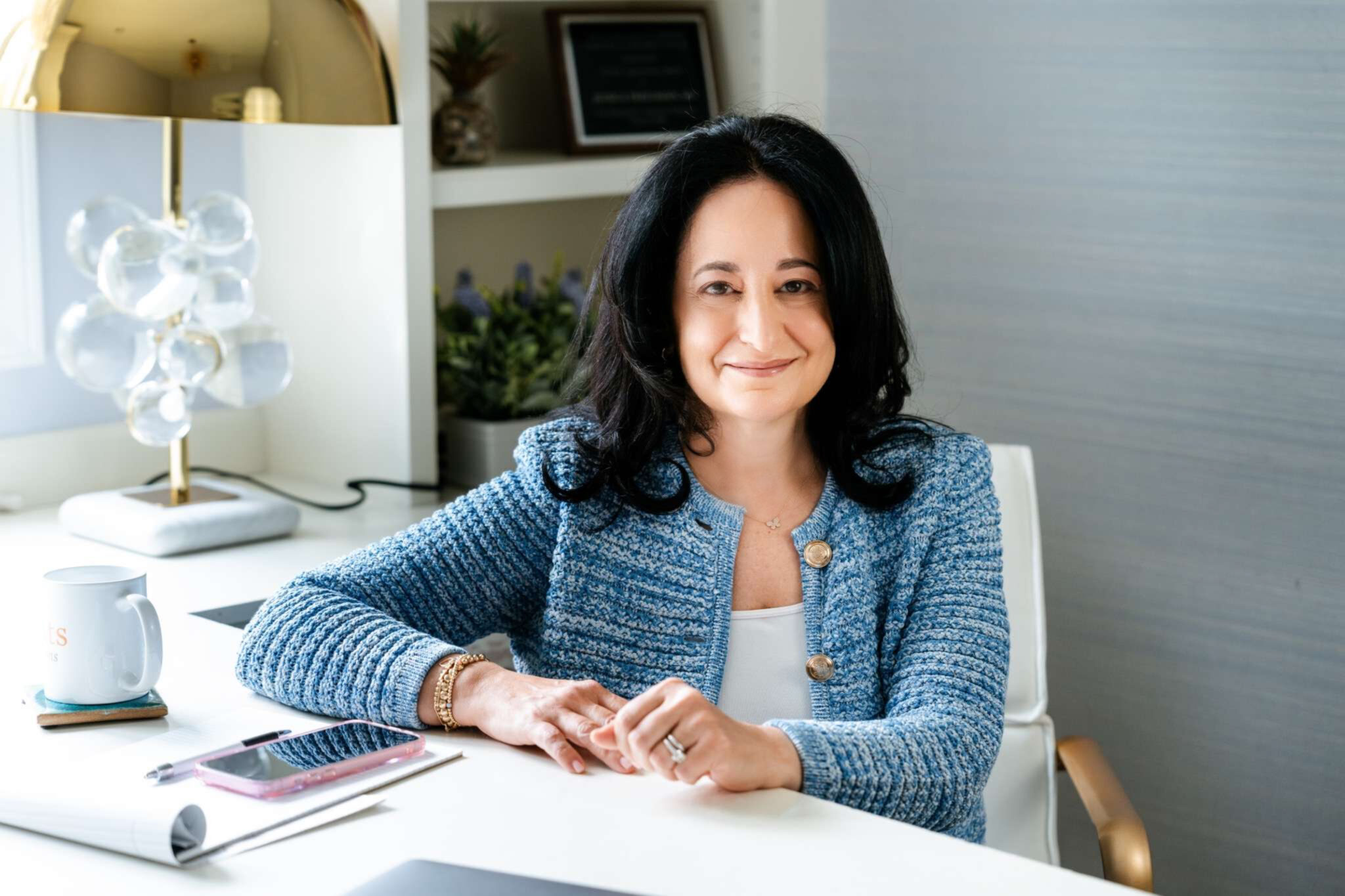
Jessica Freedman, M.D., is a board-certified emergency physician, former faculty member, medical school admissions committee member, and Associate Residency Director at the Icahn School of Medicine at Mount Sinai. She is the founder and chair of MedEdits Medical Admissions. Since 2007, she has helped thousands of students navigate the medical school admissions and residency match processes, with more than 95% of comprehensive clients gaining acceptance. She is the author of four books on medical admissions and host of The Oath podcast.