How to get into the UCSF Medical School (2026-2027)
UCSF School of Medicine has a 1.6% acceptance rate. Find out what it takes to get in, including average MCAT, GPA, requirements, secondary essays,...
/about_mega.jpg?width=500&height=500&name=about_mega.jpg)
MedEdits Medical Admissions is the nation's premier medical school admissions consulting firm. Since 2007, founder Jessica Freedman, M.D., and our team of physician educators have guided thousands of aspiring medical professionals through their premedical and medical school journey. Our faculty advisors bring invaluable insider knowledge from serving on medical school admissions committees, education committees, and hospital boards. Combined with our specialized medical admissions writing coaches, we provide the comprehensive guidance and industry expertise essential for acceptance to medical school, residency, and fellowship programs.
12 min read
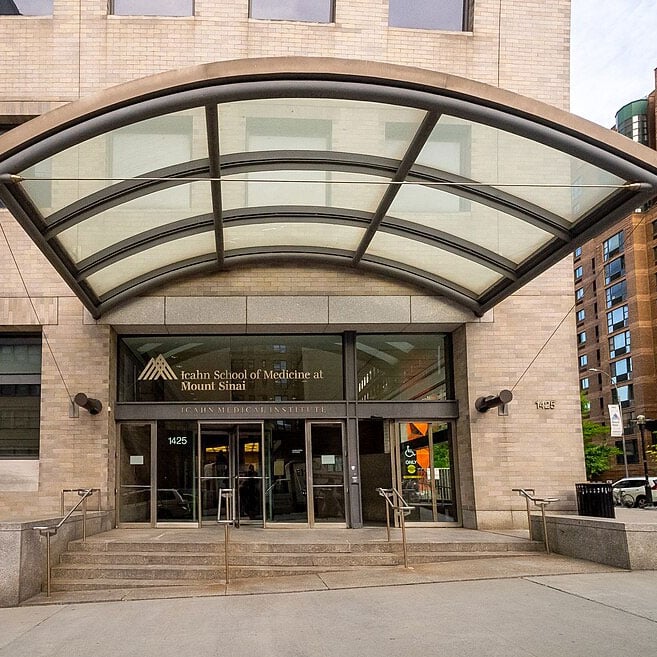
The Icahn School of Medicine at Mount Sinai is one of the most selective and most distinctive medical schools in the United States. Located in Manhattan on the border of the Upper East Side and East Harlem, Icahn sits at the heart of the Mount Sinai Health System, one of the largest academic health systems in the country, with hospital campuses serving all five boroughs of New York City. Students train across an extraordinary range of settings, from a flagship academic medical center adjacent to Central Park to community hospitals serving some of the most diverse and underserved patient populations in the nation.
This guide is different from the others in our series. I served as a faculty member, admissions committee member, and Associate Residency Director at the Icahn School of Medicine at Mount Sinai. The guidance on this page reflects direct experience evaluating applicants at this institution, not secondhand reporting.
Icahn is known for bold thinking. This is the school that created FlexMed, the early assurance program that admits college sophomores without the MCAT, on the conviction that future physicians benefit from intellectual breadth rather than a rigid premedical checklist. The school's location in East Harlem is not incidental to its identity. A commitment to the surrounding community, to health equity, and to social mission runs through the curriculum, the student culture, and, importantly, the admissions process.
Getting into Icahn requires exceptional academics, genuine scholarly depth, and clear evidence that you understand and embrace the school's mission of advancing both the science of medicine and the health of the communities it serves.
Related Article: Getting into a Top 20 Medical School
Related Article: FlexMed Early Assurance Program Advising
Related Article: How to Get Into Columbia Medical School
Traditional MD Program
Icahn's MD program enrolls approximately 120 to 130 students per entering class. The curriculum emphasizes early clinical exposure, scholarly inquiry, and flexibility, with students training across the eight hospitals of the Mount Sinai Health System.
FlexMed (Donald and Vera Blinken FlexMed Program)
FlexMed is Icahn's signature early assurance program and one of the most innovative admissions pathways in American medical education. College sophomores of any major may apply for guaranteed admission without taking the MCAT. FlexMed students are encouraged to use their remaining undergraduate years to pursue depth in the humanities, computer science, engineering, policy, or any field they choose. FlexMed admits fill a substantial share of each entering class, which means the number of seats available through the traditional AMCAS pathway is meaningfully smaller than the total class size suggests. MedEdits offers dedicated FlexMed advising.
MD/PhD Program
Icahn offers a combined MD/PhD program through its NIH-funded Medical Scientist Training Program (MSTP) for students committed to careers as physician-scientists. Mount Sinai's research enterprise, including the Graduate School of Biomedical Sciences, ranks among the strongest in the country, with particular depth in neuroscience, immunology, genetics and genomics, and artificial intelligence in medicine.
Dual Degree Options
Icahn offers additional dual degree pathways, including an MD/MPH and an MD with a Master of Science in Clinical Research, for students who want formal training in population health or research methodology alongside the MD.
Icahn is one of the most selective medical schools in the country. For the most recent admissions cycle, Icahn received 9,551 applications, interviewed 798 applicants, and enrolled 128 students.
A note on these numbers, because most websites report them carelessly. Icahn, like many medical schools, does not disclose how many applicants it accepts. The widely cited 1.34% "acceptance rate" is actually the percentage of applicants who matriculated. Because some accepted applicants enroll at other schools, Icahn's true acceptance rate is somewhat higher than 1.34%, though it remains among the lowest in the country. What the published data does tell us is encouraging for strong candidates: 128 of the 798 applicants interviewed went on to matriculate, which means at least 16% of interviewees were accepted, and the actual post-interview acceptance rate is higher still. At Icahn, the interview is the decisive hurdle. Earning one means you are a serious contender.
Two additional features of Icahn's admissions landscape deserve emphasis. First, because FlexMed students claim a substantial share of each class years in advance, the effective competition for traditional AMCAS seats is even steeper than the headline numbers suggest. Second, as a private institution, Icahn has no in-state preference. Strong candidates from any state, as well as Canadian and international applicants, are evaluated on equal footing.
The median GPA for Icahn matriculants is 3.92, placing successful applicants well above the national average for medical school matriculants. Icahn does not publish a minimum GPA and reviews applications holistically. In my experience on the committee, academic excellence functioned as a threshold rather than a differentiator. Nearly everyone seriously considered had outstanding grades. What separated admitted applicants was what they had done beyond the transcript.
The median MCAT for Icahn matriculants is 519, which corresponds to approximately the 97th percentile nationally. Icahn does not publish a formal MCAT screen, but in our experience applicants should have a 515 or higher to be competitive for an interview invitation through the traditional pathway. Applicants with scores below this range need truly exceptional accomplishments elsewhere in the application to remain in serious contention.
Related Article: Learn More About MCAT Scores
Icahn takes a more flexible, competency-oriented approach to prerequisites than many of its peers, consistent with the philosophy behind FlexMed. The following coursework is expected prior to matriculation:
Icahn permits applicants to apply with one or two prerequisites still in progress, provided all requirements are completed before enrollment. The writing-intensive requirement may be fulfilled with courses in the humanities or other departments if the coursework is substantially writing based. Always verify current requirements on the official Icahn admissions website, as the school's flexible approach means policies are applied with judgment rather than as rigid rules.
Related Article: Medical School Requirements
Icahn's curriculum reflects the school's identity as both a scientific powerhouse and a community-rooted institution. Key features include:
Early Clinical Exposure
Students begin interacting with patients in the first year, well before the formal clerkship phase. The school's integrated structure connects basic science learning to clinical reasoning from the start.
The Mount Sinai Health System
Icahn students train across one of the largest health systems in the country, including The Mount Sinai Hospital, Mount Sinai Morningside, Mount Sinai West, Mount Sinai Beth Israel, Mount Sinai Brooklyn, and Mount Sinai Queens, along with the New York Eye and Ear Infirmary. Students spend most of their clinical time at the Upper East Side campus of The Mount Sinai Hospital. and Elmhurst Hospital in Jackson Heights, Queens. Elmhurst sits in one of the most diverse zip codes in the United States based on census data. I have worked at both institutions and what students learn between the two based on patient exposure is incomparable. This diverse clinical experience spans quaternary academic medicine, community hospital care, and everything in between, across one of the most diverse patient populations in the world.
Scholarly Inquiry and Research
Research is woven into the Icahn experience, and the overwhelming majority of students participate in faculty-mentored research. Mount Sinai has invested aggressively in genomics, immunology, neuroscience, and artificial intelligence in medicine, and students have unusual access to these programs as early collaborators rather than observers.
Community Engagement and Health Equity
Icahn's East Harlem location shapes its educational mission. The East Harlem Health Outreach Partnership (EHHOP), the student-run free clinic, is one of the most respected programs of its kind in the country and a defining experience for many students. A demonstrated commitment to underserved communities is not a slogan at this school. It is visible in where students spend their time.
A Culture of Intellectual Breadth
Because FlexMed brings in students from the humanities, engineering, computer science, and the social sciences, Icahn's student body is intellectually broader than that of most medical schools. The school actively cultivates this, and it changes the texture of classroom discussion and student collaboration.
Clinical Experience
Meaningful patient contact is essential. The committee wants evidence that you understand the realities of clinical medicine and that you have engaged with patients across different settings. Given Icahn's mission, clinical experience with underserved or vulnerable populations carries particular weight.
Research
Icahn describes its atmosphere as one of intense scholarly inquiry, and the admissions committee takes that seriously. Sustained, substantive research involvement, particularly work that produced publications, presentations, or genuine intellectual contribution, is a significant advantage. The committee distinguishes sharply between applicants who participated in research and applicants who can speak with ownership about a scientific question.
Service and Social Mission
Service to underserved communities is a genuine admissions priority at Icahn, not a box to check. Applicants whose service work is sustained, authentic, and connected to a coherent narrative about the kind of physician they intend to become stand out. Episodic volunteering assembled in the final year before applying does not.
Coachability and Character
Icahn's secondary application asks directly about the toughest feedback you have ever received. This is not an accident. The committee values humility, self-awareness, and the ability to grow from criticism. Applicants who present themselves as finished products, with no evidence of having been challenged or changed, read as less credible than those who can describe real growth honestly.
Icahn follows AMCAS guidelines for letters of recommendation, and a committee letter from your undergraduate institution is preferred if your school offers one. Letters that speak specifically and credibly to your intellectual curiosity, your contributions to research or service, and your character carry far more weight than letters that merely confirm strong academic performance. Given the school's emphasis on scholarly inquiry, a detailed letter from a research mentor who knows your work intimately is particularly valuable here.
Click here to read more about medical school letters of recommendation.
Icahn participates in the centralized AMCAS application and does not require a separate personal statement. The personal statement you write for AMCAS will be sent to Icahn and all other AMCAS schools to which you apply.
For Icahn specifically, your personal statement should convey intellectual vitality and genuine purpose. This is a school that prizes bold thinking and social commitment. A conventional narrative built around generic compassion and a love of science will not distinguish you. The strongest personal statements for Icahn show a candidate who has pursued ideas deeply, engaged with communities meaningfully, and can articulate why medicine, and why now, with specificity and honesty.
Click here to read more about writing a compelling medical school personal statement.
Icahn does not ask you to submit a CV or resume separately. Instead, Icahn receives your AMCAS work and activities section along with the rest of your primary application.
At Icahn, use the most meaningful activities section to demonstrate depth, ownership, and impact. Show the scientific question you pursued, the community program you sustained, or the initiative you built, and connect that work to the physician you intend to become.
Click here to read our complete guide to the AMCAS Work and Activities Section with examples.
The Icahn secondary application fee is $110, with full fee waivers available through the AAMC Fee Assistance Program. Icahn does not require Casper. The secondary deadline is November 1.
The 2025-2026 Icahn secondary essay prompts are as follows:
Prompt 1 (Required, 250 words)
What is the toughest feedback you ever received? How did you handle it, and what did you learn from it?
Prompt 2 (Required, 250 words)
Describe a situation that you have thought to be unfair or unjust, whether towards yourself or towards others. How did you address this situation, if at all?
Prompt 3 (If applicable, 100 words)
If you are currently not a full time student, please briefly describe the activities you are participating in this academic year.
Prompt 4 (If applicable, 100 words)
Were there any adverse circumstances in your premedical preparatory journey, including but not limited to impact from COVID-19?
Prompt 5 (Optional, 150 words)
If you are committed to a particular community or if there is an important aspect of your identity not addressed elsewhere in the application, we invite you to share it here, and briefly explain how such factors may have influenced your motivation for a career in medicine.
These prompts reveal exactly what the committee values. The toughest feedback question rewards honesty and self-awareness, and the biggest mistake applicants make is choosing trivially safe feedback that required no real growth. The fairness question speaks directly to Icahn's social mission, and the strongest responses describe situations where the applicant actually did something rather than merely observed injustice. Write these essays as if a committee of physicians who have read thousands of them will see through any posturing, because they will.
Note: Icahn prompts may change from cycle to cycle. Always verify current prompts on the official Icahn admissions website before writing your essays.
May/June 2026
Submit your AMCAS application as early as possible once submission opens.
July-September 2026
Icahn sends secondary invitations. Complete your secondary promptly and thoughtfully upon receiving it.
October 1, 2026
AMCAS primary application deadline. Note that Icahn's primary deadline is earlier than that of many peer schools.
November 1, 2026
Secondary application deadline.
Fall 2026 through Winter 2027
Interviews are conducted, with invitations extended throughout the season.
Winter and Spring 2027
Admissions decisions are released.
April 30, 2027
Students holding multiple acceptances must select one medical school to attend.
Icahn conducts interviews in a conversational, one-on-one format with members of the faculty and admissions committee. Based on our students' experiences, Icahn interviews focus on your scholarly work, your service experiences, your response to challenge and feedback, and your specific reasons for wanting to train at Mount Sinai. Expect your interviewer to have read your file closely and to probe the depth of your experiences rather than simply confirming them.
Come prepared to discuss the Mount Sinai Health System, EHHOP and the school's East Harlem community commitments, and the research environment with specificity. Applicants who can articulate why this particular institution, rather than a top medical school in the abstract, consistently perform better. Interviewers at Icahn are genuinely proud of the school's distinctive culture, and authentic engagement with that culture is noticed.
As a private institution, Icahn charges the same tuition regardless of state residency.
The headline cost is significant, and Manhattan living expenses are among the highest in the country. However, Icahn has made one of the strongest institutional commitments to debt reduction of any medical school. Through its Enhanced Scholarship Initiative, Icahn caps total medical school debt at $75,000 for students with demonstrated financial need, and a large share of students receive scholarship support. For many students with need, the real cost of attending Icahn is far lower than the sticker price suggests, and lower than at many nominally cheaper schools. Admissions decisions are made without regard to financial circumstances.
The Icahn School of Medicine at Mount Sinai is consistently recognized among the top research medical schools in the United States, and Mount Sinai's research enterprise ranks among the nation's leaders in NIH funding. The school has built particular strength in genomics, immunology, neuroscience, and artificial intelligence in medicine, and the Mount Sinai Health System is one of the largest academic health systems in the country. For applicants, the practical meaning of these rankings is access: to research programs, to clinical volume and diversity, and to a residency placement record that reflects the school's national standing.
The median GPA for Icahn matriculants is 3.92. Icahn does not publish a minimum GPA and reviews applications holistically, but competitive applicants generally present a GPA of 3.8 or higher. Exceptional research, service, or other distinguishing accomplishments can compensate for a GPA modestly below the median.
The median MCAT for Icahn matriculants is 519, approximately the 97th percentile. In our experience, applicants should have a 515 or higher to be competitive for an interview invitation through the traditional AMCAS pathway.
For the most recent cycle, Icahn received 9,551 applications, interviewed 798 applicants (8.4%), and enrolled 128 students, meaning 1.34% of applicants matriculated. Icahn does not disclose how many applicants it accepts, so its true acceptance rate is somewhat higher than 1.34% but remains among the lowest in the country. Notably, at least 16% of interviewed applicants were accepted, so the interview is the decisive hurdle in Icahn admissions.
FlexMed is Icahn's early assurance program, which admits college sophomores of any major without the MCAT. Applications open in the fall of sophomore year and are due January 15. FlexMed is designed for intellectually ambitious students who want the freedom to pursue depth in any field during their remaining undergraduate years. It is highly competitive, and the application requires the same level of strategy and polish as a traditional medical school application. MedEdits offers dedicated FlexMed advising.
No. Icahn is a private institution with no in-state preference. Strong candidates from any state, as well as Canadian and international applicants, are evaluated on equal footing.
Tuition for 2025-2026 is $74,208 per year, with total cost of attendance approaching $100,000 annually. However, through its Enhanced Scholarship Initiative, Icahn caps total medical school debt at $75,000 for students with demonstrated financial need, making it one of the strongest financial aid commitments among private medical schools.
Beyond outstanding academics, the committee looks for scholarly depth, sustained and authentic service to underserved communities, intellectual breadth, and evidence of humility and growth. The secondary application's questions about tough feedback and confronting injustice are a direct window into these priorities.
With an 8.4% interview rate, only 1.34% of applicants matriculating, a median MCAT of 519, and a median GPA of 3.92, Icahn is among the most selective medical schools in the country. The effective competition for traditional applicants is higher still, because FlexMed admits fill a substantial share of each entering class years before the AMCAS cycle begins.
The Icahn School of Medicine at Mount Sinai is a school with a genuine point of view. It believes future physicians should be bold, intellectually broad, scientifically serious, and committed to the communities around them, and it has built its admissions process, its curriculum, and even its signature FlexMed program around those convictions. Having served on the admissions committee at this institution, I can tell you that applicants who merely have impressive numbers do not stand out here. Applicants who have pursued ideas deeply, served communities authentically, and grown visibly from challenge do. If your GPA is 3.8 or above, your MCAT is 515 or higher, and your application tells an honest story of scholarship and service, Icahn belongs on your list. Apply early, take the secondary essays seriously, and be prepared to engage with what makes this institution genuinely different.
Jessica Freedman, M.D., is a board-certified emergency physician, former faculty member, medical school admissions committee member, and Associate Residency Director at the Icahn School of Medicine at Mount Sinai. She is the founder and chair of MedEdits Medical Admissions. Since 2007, she has helped thousands of students navigate the medical school admissions and residency match processes, with more than 95% of comprehensive clients gaining acceptance. She is the author of four books on medical admissions and host of The Oath podcast.
UCSF School of Medicine has a 1.6% acceptance rate. Find out what it takes to get in, including average MCAT, GPA, requirements, secondary essays,...
Georgetown University School of Medicine has a 1.4% acceptance rate. Find out what it takes to get in, including average MCAT, GPA, requirements,...
David Geffen School of Medicine at UCLA has a 1.4% acceptance rate. Find out what it takes to get in, including average MCAT, GPA, requirements, and...