2 min read
Best Medical School Application Timeline (2026 – 2027)
Discover the ideal 2026 medical school application timeline and how to stand out when applying to medical school. We understand that applying to...
/about_mega.jpg?width=500&height=500&name=about_mega.jpg)
MedEdits Medical Admissions is the nation's premier medical school admissions consulting firm. Since 2007, founder Jessica Freedman, M.D., and our team of physician educators have guided thousands of aspiring medical professionals through their premedical and medical school journey. Our faculty advisors bring invaluable insider knowledge from serving on medical school admissions committees, education committees, and hospital boards. Combined with our specialized medical admissions writing coaches, we provide the comprehensive guidance and industry expertise essential for acceptance to medical school, residency, and fellowship programs.
10 min read
If you're passionate about medicine, then you may have decided that a career as a doctor is right for you. Whether your goal is to be a family physician or pursue a more specialized field, such as orthopedics or gynecology, the first step on your journey is to attend medical school. Understanding the AMCAS application is key to your success.
If you are applying to allopathic, meaning M.D. granting medical schools in the U.S., you will want to understand the ins and outs of the American Medical College Application Service, also known as AMCAS. AMCAS is used to apply to nearly all allopathic medical schools in the United States; most medical schools in Texas use a separate system, TMDSAS. If you are also applying to osteopathic medical schools, you will use AACOMAS, which I compare with AMCAS in my DO vs MD guide.
Offered by the Association of American Medical Colleges, the AMCAS is a centralized application service used by almost all the medical students in the U.S. In this sense it's like the Common Application used by undergraduate programs. Along with grades and test scores, you can expect to use the AMCAS to submit your recommendations, medical school personal statement, AMCAS work and activities, and other information to your target schools.
While the AMCAS makes applying to multiple schools easier, using this system can be a challenge. If you want to ensure medical schools receive all of your application components as early as possible in the application cycle (a goal for anyone applying to medical school), it's a good idea to familiarize yourself with the application system early in the process. Keep reading for our guide to submitting your AMCAS application successfully.
A note on cycle years: The AAMC names each application cycle for the year you would start medical school. If you submit your AMCAS application in 2027 to begin medical school in the fall of 2028, you are applying in the 2028 AMCAS cycle.
Follow the steps below to ensure you know what to expect when completing your AMCAS application.
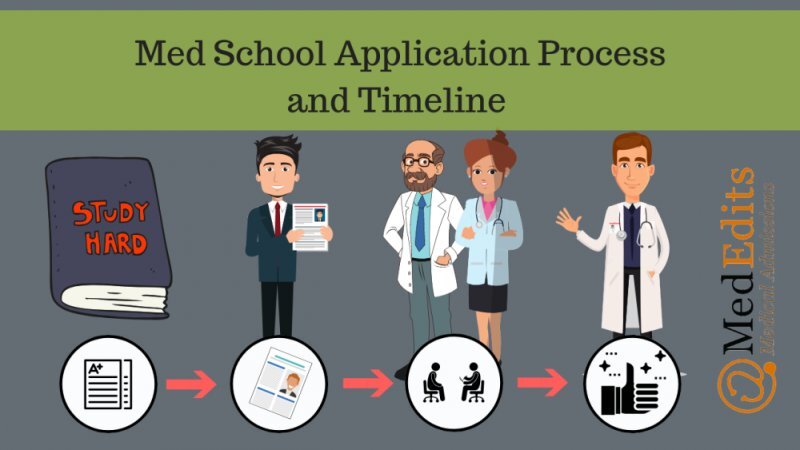
The AAMC publishes official dates each spring. The dates below follow the pattern of the 2027 cycle, when the application opened May 5, submission began May 28, transmission to schools began June 26, and the Early Decision Program deadline was August 3. I will update this table as soon as the AAMC releases the official 2028 dates.
| Date | Milestone | Status |
|---|---|---|
| January to early June 2027 | Prepare application materials Draft personal statement, gather activities, request letters of recommendation, send in transcripts, finalize medical school list; submitting early is ideal but quality matters most |
Prep phase |
| Early May 2027 | AMCAS application opens You can begin entering coursework, activities, and personal statement; nothing is submitted yet |
Opens |
| Late May 2027 | AMCAS submission opens This is the most important date. Submit as close to this date as possible. Verification queues grow every day |
Submit! |
| Mid June 2027 | Last recommended MCAT date Score release takes 30 to 35 days; sitting after this date may delay your application review. |
MCAT deadline |
| Late June 2027 | First verified applications transmitted to schools Medical schools begin reviewing applications; rolling admissions begins for most schools |
Transmission |
| July to August 2027 | Secondary applications arrive Ideally complete each secondary within 2 weeks of receipt and do not let them pile up |
Secondaries |
| Early August 2027 | Early Decision Program (EDP) deadline EDP applicants commit to a single school; acceptance decisions released by Oct 1 |
EDP deadline |
| August 2027 to March 2028 | Interview season Invitations arrive on a rolling basis; respond quickly and prepare thoroughly |
Interviews |
| October to December 2027 | Most school application deadlines Individual school deadlines vary, so verify each school's deadline on AMCAS and do not wait until deadlines |
Deadlines |
| October 2027 to March 2028 | Acceptance offers rolling Acceptances, waitlists, and rejections arrive on a rolling basis throughout this window |
Decisions |
| April 30, 2028 | Deadline to plan to enroll After this date, you must indicate where you plan to enroll and release all other seats |
Plan to Enroll |

The first step in applying to medical schools through the AMCAS is to create an account on the website. Start by clicking on the blue AMCAS Sign In tab on the right side of the page.

The site will then prompt you to create an account and select an application cycle. Because the AAMC names each cycle for the year you would start medical school, if you plan to apply in 2027 to begin medical school in the fall of 2028, you would select the 2028 application cycle. You should expect to submit basic information at this time, including legal name, citizenship, and birthdate. At this point, you will also receive an AMCAS ID, which will function as a signature for communications with medical school admissions offices.
On the main screen, you will see a checklist for the different components of your application.

Completing your Identifying Information, Schools Attended and Biographic Information is very straightforward. You will indicate your state residence in this section. If you have an institutional action, felony, arrest or misdemeanor, you will also need to complete those sections very thoughtfully. In the biographical section you will also select your race/ethnicity and if you consider yourself to be of disadvantaged status.

After creating an account, one of the first steps in the AMCAS application process is entering your undergraduate coursework. You will be required to enter all college coursework you have ever completed which includes any dual enrollment high school courses.
The AMCAS requires students to enter each class individually and properly classify it based on the subject. Additionally, students will be asked to specify during what academic year they took the course, with summer classes counting toward the following school year.
Proper classification is important because the AMCAS separates science courses from non-science courses when calculating GPA. The AMCAS will provide schools with both a BCPM (Biology/Chemistry/Physics/Math courses) GPA and an AO (all other courses) GPA, along with a total GPA value.
BCPM courses are listed below but you should also refer to the AMCAS course classification guide. If you are unsure of a course classification, you can check with your registrar but AMCAS advises you choose the "best match" when deciding on course classification especially for interdisciplinary courses. For all course designations, refer to the official AMCAS course classification guide.
BCPM Courses:
Biology (BIOL) Anatomy, Biology, Biophysics, Biotechnology, Botany, Cell Biology, Ecology, Entomology, Genetics, Histology, Immunology, Microbiology, Molecular Biology, Neuroscience, Physiology, Zoology
Chemistry (CHEM) Biochemistry, Chemistry, Physical Chemistry, Thermodynamics
Physics (PHYS) Astronomy, Physics
Mathematics (MATH) Applied Mathematics, Biostatistics, Mathematics, Statistics
When listing your course on your AMCAS application, you must list it exactly as it is printed on the transcript itself. This is very important for verification purposes.
You will also need to send AMCAS an official transcript from every college you attended or attempted/completed coursework including college courses taken during high school. The schools should send official transcripts directly. Both paper and electronic options are permitted; however it is important to keep in mind that paper transcripts are processed more slowly.
After adding your coursework to the AMCAS application, you will need to provide information detailing your extracurricular experiences and work history.

You write about up to 15 experiences and you identify three of those 15 experiences as "most meaningful." You will select an experience type for each entry and for each you will say what hours you have completed, if the activity was repeated, and if there are any anticipated hours. See the images below for clarification.

You will then add an organization name and contact information.

Finally, for each experience, you are allowed 700 characters with spaces to write a description and for each most meaningful you have an additional 1325 characters with spaces for elaboration.
As a former admissions committee member, I can tell you that how you write about your experiences matters as much as the experiences themselves. Every medical school screens applicants on metrics, whether or not it publishes a cutoff. Once your GPA and MCAT meet that screen, reflection and insight are what move the needle. Admissions committees want to understand what you learned, how an experience changed you, and what it reveals about the physician you will become, not simply a list of your duties. This is especially true for your three most meaningful entries. I explain how to write reflective entries in my AMCAS Work and Activities guide.

After you "save" your letter writer information, you will be prompted to generate a letter request form. The form allows your letter to be matched to your application and is very important. It also has instructions for how to submit your letter.
You will be able to print it out at any time. You'll have the opportunity to submit 10 entries, which you can assign to specific medical schools as desired. Note that you can't edit or remove letters after submitting them. The application system also allows you to choose which schools to send your letters to by scrolling through a dropdown menu.
It's no secret that letters of recommendation play a key role in med school admissions decisions. While the AMCAS does not require students to enter letters before submitting their applications, it's best to start the process of gathering these recommendations as soon as possible.
When you're ready, be sure to create a single AMCAS entry for each letter or recommender; this includes a letter packet, committee letter, or individual letter. Letters do not roll over if you are a reapplicant.
On the next page you will be able to add medical schools to which you'd like to apply. Keep in mind that you can add medical schools after submitting your application. You will also designate which letters you want to send to which medical schools.

Medical school applicants also need to enter their personal statements to the American Medical College Application Service. Note that the AMCAS refers to this section as Personal Comments.

It's important to realize that students who are applying to an MD-PhD program will need to submit two additional essays called the MD-PhD Essay and the Significant Research Experience Essay. Be sure to spend plenty of time composing your essay or essays, as they represent one of the best opportunities for medical schools to get a sense of your personality and passion for medicine.
The same principle I describe above for your activities applies here. A strong personal statement does more than recount what you did. It shows insight into what your experiences taught you and why medicine is the right path for you, and that reflection is what helps an applicant stand out once their metrics meet a school's screen.
One of the last components to enter in the AMCAS is your standardized test scores. It's important to note that the MCAT will automatically release all the tests for which you've earned scores to the AMCAS. Since most medical schools require MCAT scores, you should make sure you take the exam within three years of applying to programs.
If you're filling out the AMCAS before taking the MCAT, you can simply list the date that you plan to take the test. This lets admissions committees know that scores from you are forthcoming. You can also enter scores for the GRE, LSAT, and GMAT in the standardized testing section if you desire but medical school admissions committees are unlikely to know how to evaluate these.
Medical school applicants should be aware that not all information submitted in AMCAS can be edited. For example, if you want to correct a school name or course, you will need to submit an Academic Change Request after the fact. You can find this form under the Quick Links section of the AMCAS main menu. You can also check your document status on this page.

Students should be aware that they will have to pay an application fee for AMCAS to process and verify their application. This cost includes just one medical school. Applicants should expect to pay a separate fee for every additional school on their list. For the 2027 cycle, the AMCAS processing fee was $180, which included one medical school, and each additional school was $48, so applying to 20 schools cost $1,092. The AAMC publishes updated fees for each cycle.
The good news is that a Fee Assistance Program exists to help students who require financial aid. Applicants who receive assistance will earn a waiver of all AMCAS fees for one application submission with up to 20 medical schools, along with reduced MCAT registration fees. Fee assistance benefits are not retroactive, so apply before you submit your AMCAS application.
At any time you can go to the Main Menu of AMCAS to check the Document Status box (see above) as well as the Application box to check the status of your application, print transcript request forms, letter request forms, print your application, and view your application history.

The AMCAS application typically opens for applicants to begin filling out their information in the first week of May, and submission opens in late May. For the 2027 cycle, the application opened May 5, 2026, and submission opened May 28, 2026, so expect similar dates in 2027. You should begin working on your application as soon as it opens, since submitting early in the cycle significantly improves your chances of receiving interview invitations.
Each medical school sets its own AMCAS deadline, but most fall between October and December. However, medical school admissions is a rolling process, which means applying early, ideally on or near the first day of submission, gives you a significant advantage over applicants who wait.
AMCAS verification typically takes 4 to 6 weeks during peak periods in the summer. Applications submitted earlier in the cycle are generally verified faster. Once verified, your application is transmitted to the medical schools you selected.
For the 2027 cycle, the AMCAS fee was $180 for the first medical school and $48 for each additional school. Applicants approved for the AAMC Fee Assistance Program receive a waiver of all AMCAS fees for one submission with up to 20 medical schools.
Most competitive applicants apply to between 15 and 30 schools, depending on their GPA, MCAT score, and geographic preferences. A well-balanced list includes reach schools, target schools, and likely schools. A MedEdits advisor can help you build a strategic, personalized school list.
Yes. You can add medical schools to your AMCAS application after submission. However, your application will only be transmitted to newly added schools going forward, so it is best to include all of your target schools from the start to avoid delays.
The AMCAS personal statement, referred to as "Personal Comments" in the application, has a limit of 5,300 characters including spaces. This is roughly one page of single-spaced text. Your personal statement is one of the most important components of your application and should clearly convey your motivation for medicine and what makes you a unique candidate.
The Work and Activities section allows you to list up to 15 experiences, including clinical work, research, volunteering, leadership, and employment. You have 700 characters per entry to describe each experience, and you may designate up to three entries as "Most Meaningful," for which you receive an additional 1,325 characters to elaborate on their significance.
Yes. AMCAS recalculates your GPA using its own standardized formula, which may differ from the GPA on your transcript. It calculates a BCPM GPA (Biology, Chemistry, Physics, and Math), an AO (All Other) GPA, and a cumulative total GPA. All coursework, including retaken courses and classes where you earned a failing grade, must be included.
After submission, AMCAS verifies your transcripts and application information, which typically takes several weeks. Once verified, your application is transmitted to your selected medical schools. Most schools will then send secondary application invitations, which you should complete as quickly as possible.
The AAMC offers a Fee Assistance Program (FAP) for applicants who demonstrate financial need. FAP recipients receive a waiver covering all AMCAS fees for up to 20 medical schools, along with reduced fees for MCAT registration and other AAMC products. You must apply for FAP before submitting your AMCAS application to receive the benefit.
About MedEdits
MedEdits helps students get admitted to medical school and residency programs. Our consultants have years of experience serving on medical school admissions committees, and as faculty members at the top medical schools in the country.
Need Help With Your Medical School Application?
Schedule a Free 15 Minute Consultation with a MedEdits expert.
Add us as a preferred source on Google
Jessica Freedman, M.D., is a board-certified emergency physician, former faculty member, medical school admissions committee member, and Associate Residency Director at the Icahn School of Medicine at Mount Sinai. She is the founder and chair of MedEdits Medical Admissions. Since 2007, she has helped thousands of students navigate the medical school admissions and residency match processes, with more than 95% of comprehensive clients gaining acceptance. She is the author of four books on medical admissions and host of The Oath podcast.
2 min read
Discover the ideal 2026 medical school application timeline and how to stand out when applying to medical school. We understand that applying to...

When I sat on the admissions committee at Mount Sinai, I saw strong applicants lose months because of a missing letter of recommendation, an MCAT...
Introduction